
Hot air balloon safaris in Tanzania offer one of the most surreal ways to experience African wildlife—silent, elevated, and emotionally unforgettable. Unlike traditional game drives that keep you close to the ground, a balloon safari lifts you above the landscape, revealing the vastness of the savannah in a way that completely changes how you perceive the wilderness below.
This is not just a sightseeing activity. It is a perspective shift. From the sky, the Serengeti plains unfold like a living map—herds moving in coordinated patterns, rivers cutting through the terrain, and the early morning light slowly awakening the ecosystem. For many travelers, this becomes the most memorable moment of their entire safari.
Balloon safaris in Tanzania are offered in select wildlife areas where landscapes are open, wildlife density is high, and early morning flying conditions are ideal.
The most iconic location is the Serengeti National Park, where balloon flights often coincide with the Great Migration. Depending on the season, flights may take place in different regions of the park, including central Serengeti, western corridors, or northern areas near river crossings. This seasonal movement makes each flight feel unique and dynamic.
Another popular area is the Tarangire National Park, where balloon safaris provide a completely different visual experience. Here, the landscape is defined by ancient baobab trees, winding rivers, and large elephant herds. From above, Tarangire feels more intimate and sculptural compared to the endless openness of the Serengeti.
Some luxury safari circuits may also combine balloon experiences with nearby conservation areas, but Serengeti remains the flagship destination due to its scale, wildlife density, and global recognition.
What makes location important is not just scenery, but behavior patterns. In open ecosystems like Serengeti and Tarangire, wildlife movement is predictable enough in the early morning hours to create consistently rewarding aerial viewing.
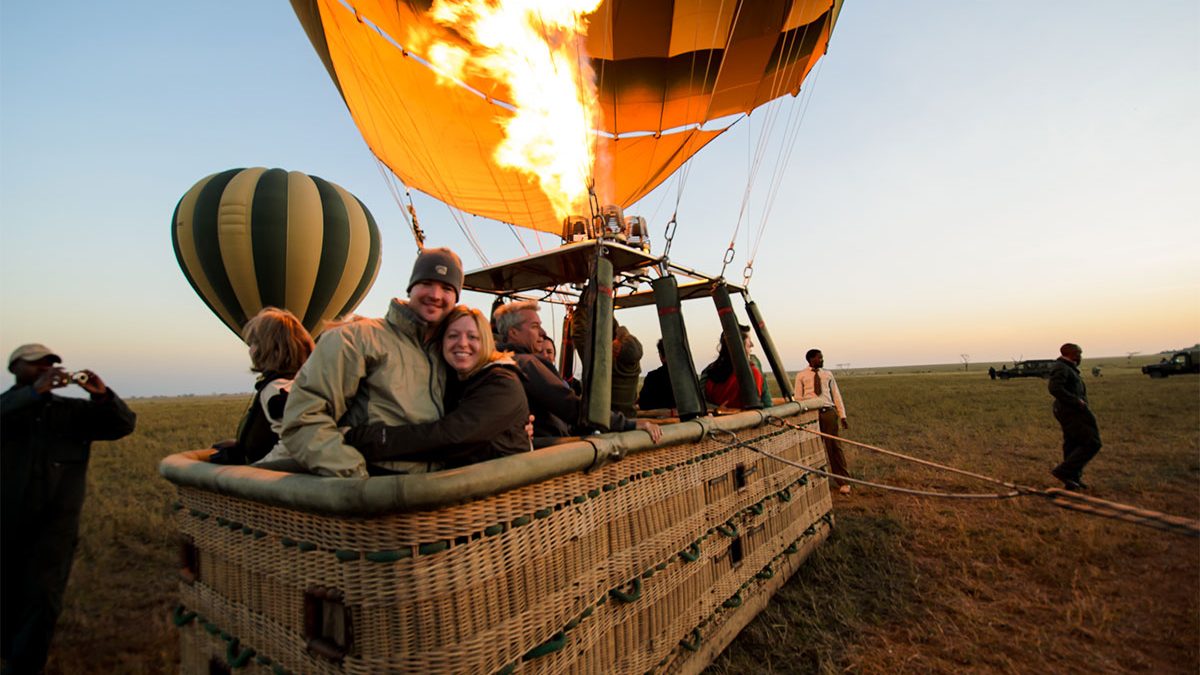
Balloon safaris operate year-round, but the experience changes depending on season, weather conditions, and wildlife movement.
The dry season (June to October) is widely considered the most reliable period. Clear skies, stable winds, and excellent visibility make this season ideal for aerial photography and uninterrupted flights. Wildlife is also easier to spot as animals gather around water sources, creating concentrated viewing opportunities from above.
Between December and March, the southern Serengeti becomes especially dramatic due to the wildebeest calving season. From a balloon, this period offers intense wildlife density, predator-prey interactions, and dynamic movement across the plains.
The green season (April–May and parts of November) introduces a different kind of beauty. The landscape becomes lush and vibrant, with dramatic skies and softer light conditions. While occasional weather interruptions may occur, the scenery during this period is often considered the most visually artistic.
The key psychological truth many travelers miss is this: balloon safaris are not about “perfect timing,” but about perspective. Even when conditions vary, the emotional impact of floating silently above the African wilderness remains consistently powerful.
A balloon safari is typically structured as an early morning experience, beginning before sunrise. Guests are collected from their lodges or camps in the dark and driven to the launch site, where balloons are prepared as the first light appears on the horizon.
Once airborne, the flight lasts approximately one hour, drifting with the wind rather than following a fixed route. This creates a natural, unpredictable journey across the landscape, where wildlife encounters feel organic and unplanned.
After landing, guests are usually treated to a traditional bush breakfast set in the open wilderness. This is not just a meal—it is part of the experience, reinforcing the sense of being fully immersed in nature.
Balloon safaris are often combined with luxury or mid-range safari itineraries. Many travelers integrate them into Serengeti or Tarangire packages, allowing them to pair ground-level game drives with aerial perspectives. This combination creates a more complete understanding of the ecosystem.
From a travel design perspective, balloon safaris are usually positioned as a premium add-on experience. They are limited in availability and highly dependent on weather, which increases their exclusivity and perceived value.
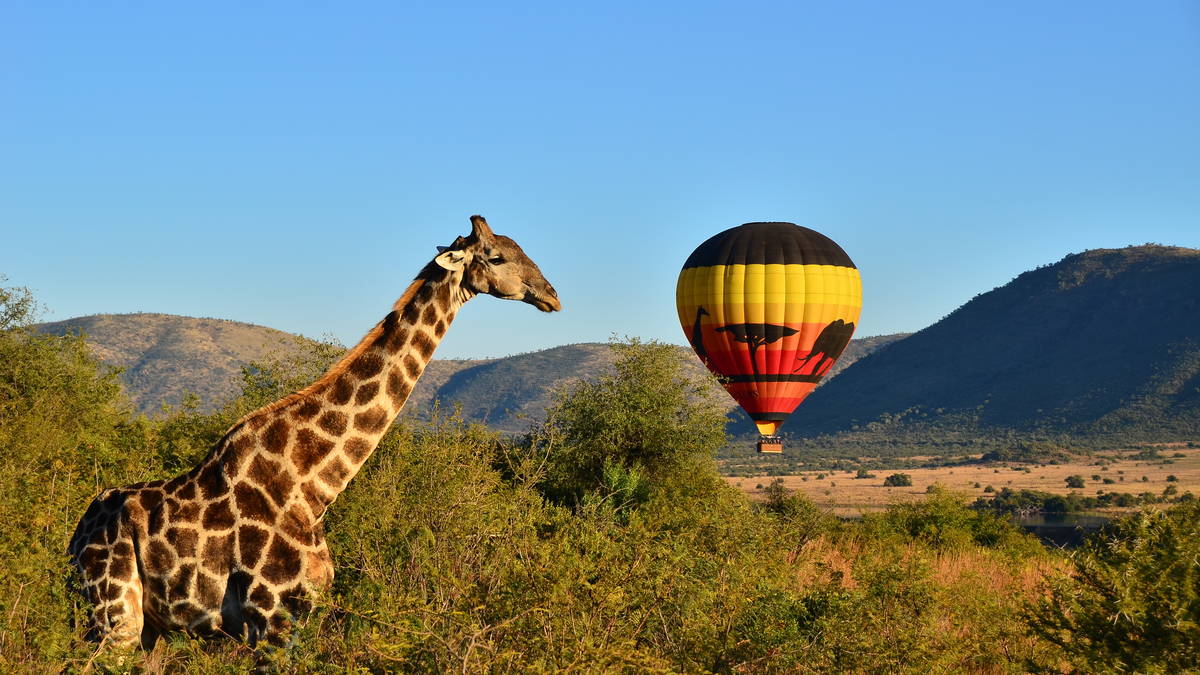
A balloon safari is one of those experiences where expectations matter just as much as execution. Many travelers assume it is purely about seeing animals from above, but the real value lies in atmosphere, silence, and emotional perspective.
Dress warmly in layers, especially for early morning conditions. Temperatures at launch time can be surprisingly cold, even in tropical regions, but they warm up quickly once the sun rises.
If you are traveling for photography, bring a camera with good low-light capability and a wide-angle lens. However, avoid over-focusing on capturing every moment. Some of the most powerful parts of a balloon safari happen when you simply observe without distraction.
Another important insight: balloon safaris are weather-dependent. Flights may be delayed or rescheduled due to wind conditions or safety considerations. Flexibility is part of the experience, not a limitation.
For first-time safari travelers, this activity is best enjoyed after at least one ground game drive experience. This creates context—you understand animal behavior at eye level first, then see it from above, which deepens appreciation significantly.
Ultimately, a balloon safari is not just a tour—it is a moment of stillness above one of the most dynamic ecosystems on Earth. It transforms the way travelers understand scale, movement, and silence in the African wilderness, leaving a lasting impression that often becomes the emotional highlight of the entire journey.