
Wildebeest Great Migration
Wildebeest Great Migration in Tanzania
The Wildebeest Great Migration is one of the most powerful natural events on Earth—a continuous cycle of movement, survival, and instinct that shapes the entire Serengeti ecosystem. It is not a single moment or a fixed location, but a living process where over 1.5 million wildebeest, accompanied by hundreds of thousands of zebras and gazelles, move across Tanzania and Kenya in search of fresh grazing and water.
What makes the migration extraordinary is not just its size, but its unpredictability. The herds do not follow a straight path—they respond to rainfall, grass growth, predator pressure, and seasonal patterns. For travelers, this creates a rare kind of safari experience where timing and location determine what version of the migration you witness.
Seeing the Great Migration is often described as witnessing nature in its purest survival state. It is both beautiful and intense, calm and chaotic, predictable in rhythm yet unpredictable in detail.
Where to Visit for Great Migration
The Great Migration moves through different regions of the Serengeti ecosystem throughout the year, and each area offers a distinct experience.
In the Southern Serengeti (Ndutu area), between December and March, the migration reaches its calving grounds. This is where thousands of wildebeest give birth within a short window of time. The open plains make wildlife viewing incredibly clear, and predator activity is high as lions, cheetahs, and hyenas follow the herds.
In the Central Serengeti (Seronera region), the migration passes through multiple times during the year. This area offers some of the most consistent wildlife viewing, with resident predators and migrating herds often sharing the same space.
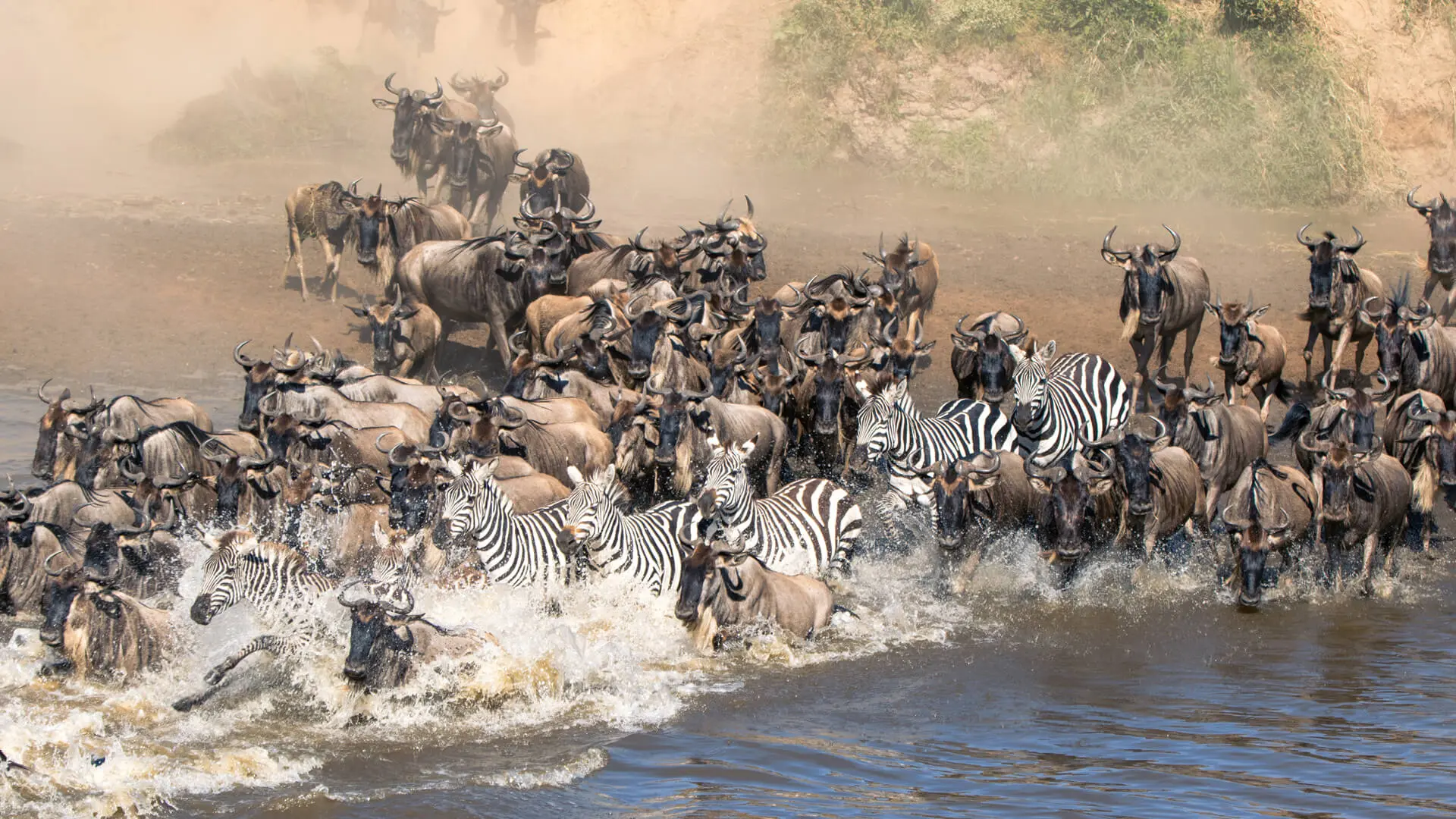
In the Western Corridor, typically between May and July, the herds move toward the Grumeti River. This stage introduces river crossings and dramatic encounters with crocodile-filled waters, although timing depends heavily on rainfall patterns.
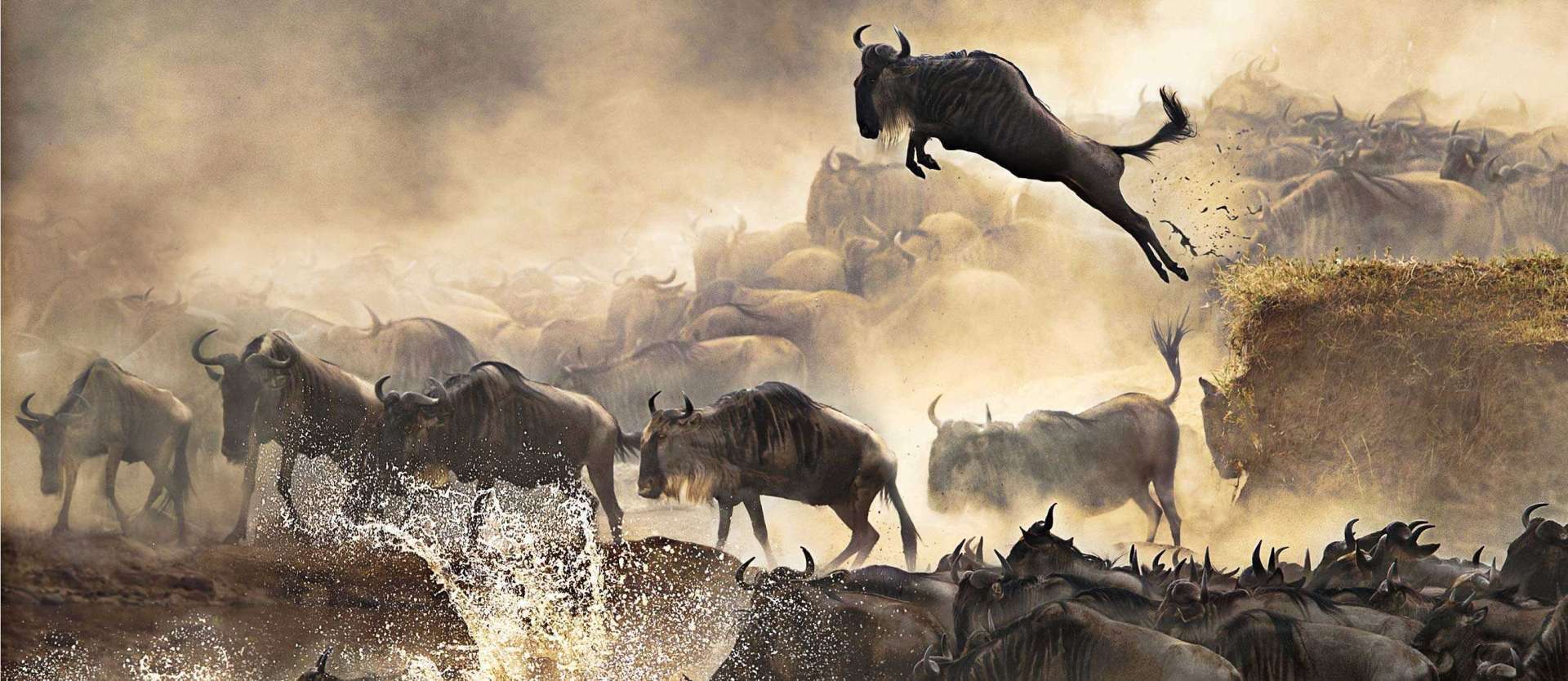
In the Northern Serengeti (Kogatende and Lobo areas), from July to October, the migration reaches one of its most iconic moments: the Mara River crossings. Here, wildebeest gather at the riverbanks, waiting for the instinct-driven moment to cross into Kenya’s Maasai Mara. This stage is often the most dramatic and widely photographed.
What is important to understand is that the migration is not a single event—it is a cycle moving through connected landscapes. Choosing where to visit determines which chapter of the story you experience.
Best Time for Wildebeest Great Migration
The Great Migration can be seen throughout the year, but different seasons reveal completely different behaviors and emotions within the herd.
From December to March, the southern plains come alive with the calving season. This is a time of birth, vulnerability, and intense predator interaction. For many travelers, it is one of the most emotionally powerful safari experiences.
Between April and June, the herds begin moving northward through the central and western Serengeti. This transitional phase is less predictable but offers excellent opportunities to witness large-scale movement across vast landscapes.
From July to October, the migration reaches its most dramatic stage in the northern Serengeti, where river crossings become the highlight. This is when tension builds as herds gather at the Mara River, waiting for the right moment to cross.
Between November and December, the migration begins moving back toward the southern plains, completing the cycle and restarting the seasonal rhythm.
A key insight many travelers miss is that there is no single “best time” for the migration. There are instead different emotional experiences—birth, movement, survival, and crossing—all shaped by timing and location.
Wildebeest Tours & Safaris
Experiencing the Great Migration typically involves mobile safari itineraries or strategically located lodges that follow the movement of the herds.
Mobile camps are one of the most effective ways to experience the migration. These camps move seasonally to stay close to the herds, allowing travelers to reduce travel time and maximize wildlife viewing opportunities.
Luxury lodges and tented camps in key migration zones offer a more stationary experience with high comfort levels. These are often positioned in areas where migration activity is expected during specific months.
Game drives are the primary way to observe the migration, often conducted early in the morning and late in the afternoon when wildlife is most active. In some regions, full-day drives are used to track movement patterns and increase chances of witnessing river crossings or large herd formations.
For photographers and serious wildlife enthusiasts, specialized migration safaris focus on timing, positioning, and patience—understanding that the most dramatic moments often require waiting rather than chasing.
The most important aspect of migration tours is flexibility. Wildlife does not follow human schedules, so successful safaris are designed around movement patterns rather than fixed expectations.
Great Migration Travel Advice
The most important truth about the Great Migration is that it cannot be guaranteed in a single moment or location. It is a living system, shaped by nature rather than tourism demand. Understanding this mindset transforms the entire experience.
Many travelers arrive expecting river crossings or massive herds immediately, but the migration often rewards patience. Sometimes the most powerful moments are not the dramatic crossings, but the quieter scenes—calving on open plains, predators stalking in golden light, or endless herds moving silently across the horizon.
Choosing the right region at the right time is more important than trying to see everything. Working with experienced safari planners or guides increases your chances of being in the right place when major movement occurs.
Binoculars, a good camera, and comfortable safari clothing are essential, but equally important is mental flexibility. Weather, wildlife behavior, and timing can shift plans quickly, and the best experiences often come from adapting rather than controlling.
Finally, it is important to remember that the Great Migration is not a performance—it is survival. Every movement, crossing, and gathering is driven by instinct and necessity. Observing it with respect and awareness turns the experience from a simple wildlife sighting into a deeper understanding of one of the planet’s most extraordinary natural cycles.
For many travelers, witnessing the Great Migration is not just a highlight of a safari—it becomes a defining memory of Africa itself.